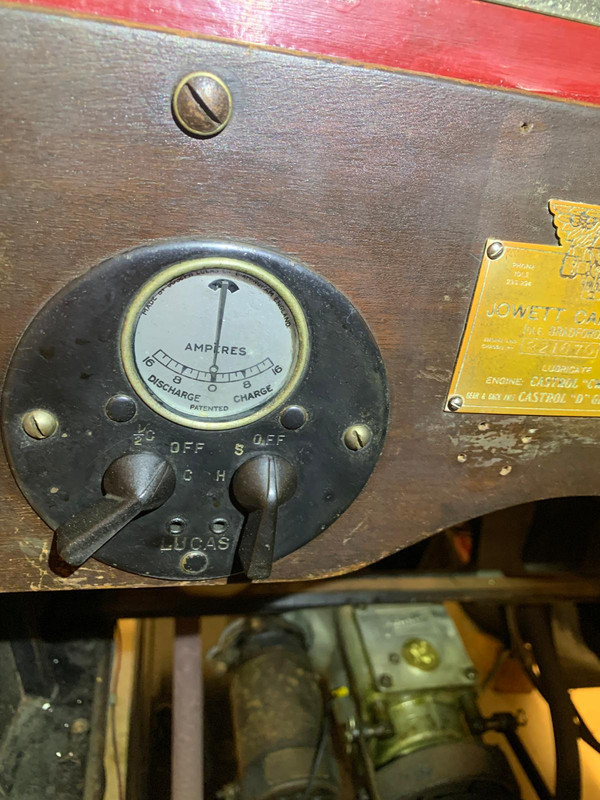
Ignition on/off switch

Veteran talk! email JCC UK Registrar. Technical Question? Try Service Bulletins or Tech Library first. Note that you need to be a club member to view the Tech Library.
This Short 2 has been stolen. If you have any information please report to by the West Midlands police on 0345 113 5000 (Reference 20-SW-6923K-11) or webmaster
More detail in this thread
Post Reply
ChrisE
Posts: 82
Joined: Sat Sep 01, 2018 8:23 am
Your interest in the forum: Have a 1929 Full Four
Given Name: Chris

Ignition on/off switch

Post by ChrisE »

Electrical ignition switch.

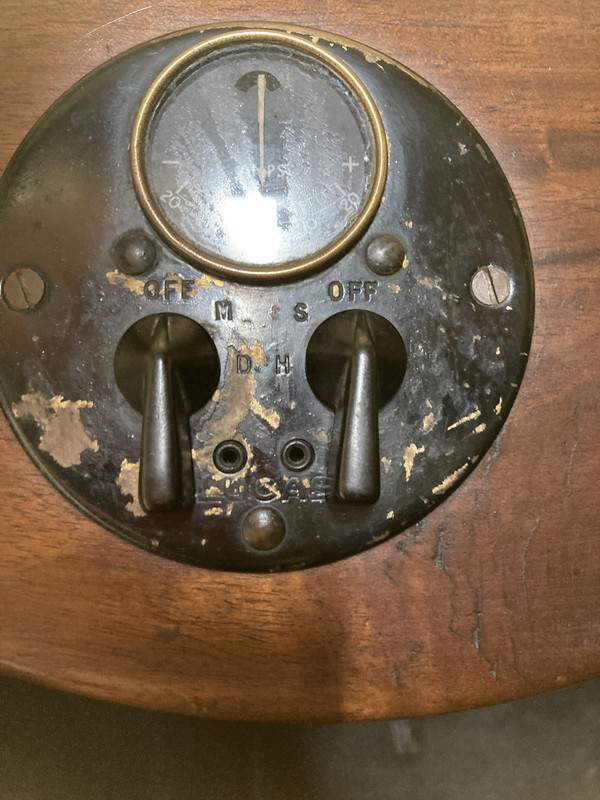
Please look at the photos below of two Jowett stitches. One is my 1929 and the other a friends 1927.

The right hand switch is lights and presumably the letters stand for “off”, for “S” Sidelights and for “H” Headlights.

But why are the ignition switches so different and what do the initials “C” and “1/2C” and for in 1926 and “M” and “D” stand for in 1929? Why would they be different?

The 1926 has been totally re-wired in a bonkers way with many, many too many wires, modern connectors and shiny bright cables making it far too complicated and it would be good to strip it all out and re-wire it correctly.

I wondered if "M" and "D" are "Magneto" and "Dynamo" but you'd never have both fitted so that doesnt make sense.

Thanks, Chris
Image

Image
Keith Clements
websitedesign
Posts: 3968
Joined: Wed Feb 08, 2006 11:22 am
Your interest in the forum: Jup NKD 258, the most widely travelled , raced and rallied Jowett.
Given Name: Keith
Contact:

Re: Ignition on/off switch

Post by Keith Clements »

There are more people on JT more knowledgeable than me on pre-war models but my guess is that the dynamo charging rate (before the advent of regulators) was controlled by the driver, hence Charge and half charge. Later dynamos had a field coil controlled by the regulator that measured battery voltage and current being used by all the ancillaries. You would put on half charge during the day and full charge when night driving.
The M is the ignition kill position. If the car does not have a magneto then this is just a historical hangover. The terminal would short the magneto to ground prior to switching the car to OFF.
My guess is the D means drive, that is put the ignition on by connecting the magneto to the ignition circuit.
There was no need for a battery to have ignition with a magneto, but you could still have a dynamo to charge a battery for the lights.

See
viewtopic.php?t=6258
The vintage handbook shows the charging rates on page 15
viewtopic.php?p=29115#p29115
or this word processed copy by Mike Alfrey
download/file.php?id=7099&mode=view

And page 16 explains magento and battery ignition start up procedures.
skype = keithaclements ;
Post Reply

Return to “Pre-war”