Hi everyone,
There has been some discussion about hydraulic cam followers recently and it would be interesting to assemble an engine using the original hydraulic tappets, especially as we are finding that the earlier crankcases, which would originally have been for hydraulic tappets, seem to be surviving better with much less cracking and corrosion problems.
However, I recollect that the camshafts were different between those suitable for hydraulic tappets and those for solid tappets. I imagine one way of checking is to measure the heel to tip height on the camshafts? The later camshafts for solid tappets have a heel to tip height of 1.266" and I think the hydraulic camshafts were different? Does anyone have the specification for the heel to tip height for the camshafts suitable for hydraulic tappets?
There have been discussions on a different thread on why Jowett's dropped the hydraulic tappets? I guess that cost might have been a contributory factor, but others have suggested that there were supply problems? My recollection of the story was that dirty oil caused problems. It is interesting that I understand that full-flow filters, such as on the Javelin/Jupiter engines don't filter to the same efficiency as bypass filters, which can be more discrimatory but probably don't have the necessary flow rates. I believe some big engines, Cummings I think, have both types of filter, to get the best of both worlds.
Tony Grey, when he visited us from Tasmania, mentioned that he has fitted hydraulic tappets to a Javelin engine, but sourced from a 'modern'. I was interested to note that modern hydraulic tappets have a roller system at the foot of the tappet, which must cut down noise quite a lot?
Anyway, if someone could let me have the heel to tip heights for the hydraulic camshafts, or some other method of identification, I would be most greatful.
David
Hydraulic camshafts
-
David Morris
- Posts: 864
- Joined: Thu Feb 09, 2006 9:23 am
- Your interest in the forum: Jowett Javelins since 1964. Now a Jowett Stationary engine owner and club member since 1964.
- Given Name: David
- Location: Sunny Bristol
-
Forumadmin
- Site Admin
- Posts: 20676
- Joined: Tue Feb 07, 2006 5:18 pm
- Your interest in the forum: Not a lot!
- Given Name: Forum
Re: Hydraulic camshafts
One problem with the Jowett filter was that when it became clogged it bypassed the dirty oil to the bearings... In the days of poor oils (and having dismantled some engines with what can only be described as sludge as oil) I suspect that dirty oil may well have been the hydraulic tappets' demise.
-
robert lintott
- Posts: 353
- Joined: Sun Mar 02, 2008 12:29 am
- Your interest in the forum: Javelin E2PD 22752 D PHU317
Austin 16/6 tourer 1930
Ferrari 308 gt4 1978
Alfa Romeo Spider 2000 1978
Jaguar XJ6 diesel 2006 - Location: somerset uk
Re: Hydraulic camshafts
David , The information you are looking for is in Technical Bulletin no 34 issued in November 1950 , also no 38 refers . The camshaft , tappets and push rods are different and the cams have a reduced base diameter of 1.0418 vs 1.070, presumably inches ? regards Bob
-
PJGD
- Posts: 388
- Joined: Sun Feb 19, 2006 3:58 am
- Your interest in the forum: A Jowett owner since 1965; Javelins, Bradford, and Jupiter (current). Interested in all things Jowett.
- Given Name: Philip
- Location: Detroit, Michigan, USA
- Contact:
Re: Hydraulic camshafts
The impact of dirty oil on the demise of the hydraulic tappet engines would have been a contributing factor, not the primary reason. Even today, dirty oil can occasionally result in malfunction of hydraulic tappets in modern engines. The very extensive Bill Boddy [Motor Sport] article on the development of the Javelin and Jupiter also states that it was a supply issue with the hydraulic tappets that drove Jowett to revert to solid tappets, so to me it is pretty conclusive based on the two contemporaneous reports [Boddy and Tubbs] that this was the reason.
Back in that period, lube oils were pretty miserable relative to the highly engineered multigrade lubricants that we have today. For many years, some engines did use bypass filters, either on their own or in conjunction with full flow filters. The bypass filters would filter down to a finer level to take out the really fine dirt and carbon, but the regular full-flow filter should normally be capable of filtering down to the level necessary by a hydraulic tappet. As Keith points out, when the oil is cold and thick (or the filter is clogged anyway), dirty oil will bypass the filter element via the bypass/overpressure valve, so it is quite possible for dirty oil to get through to the tappets that way. I think that this scenario is much less likely to happen with modern oils.
As for using modern hydraulic tappets, this should be quite possible although most American engines standardised on 7/8" diameter rather than our 13/16" diameter. You also need to be sure that the modern tappet has enough "stroke" of the inner piston to accommodate our range of lash adjustment. The later crankcases will also require modification to open up the oil flow for hydraulic tappets to function properly. As for the roller tappet designs, that is a much better solution greatly to be preferred relative to flat tappets, but they require a new cam form designed for them (quite different from a flat tappet cam profile), and means are required to prevent rotation in the crankcase so that the roller axle is always parallel to the cam axis. Once engineered though, the engine will have less friction, resulting in a bit more power, improved fuel consumption, and longer life.
Philip
Back in that period, lube oils were pretty miserable relative to the highly engineered multigrade lubricants that we have today. For many years, some engines did use bypass filters, either on their own or in conjunction with full flow filters. The bypass filters would filter down to a finer level to take out the really fine dirt and carbon, but the regular full-flow filter should normally be capable of filtering down to the level necessary by a hydraulic tappet. As Keith points out, when the oil is cold and thick (or the filter is clogged anyway), dirty oil will bypass the filter element via the bypass/overpressure valve, so it is quite possible for dirty oil to get through to the tappets that way. I think that this scenario is much less likely to happen with modern oils.
As for using modern hydraulic tappets, this should be quite possible although most American engines standardised on 7/8" diameter rather than our 13/16" diameter. You also need to be sure that the modern tappet has enough "stroke" of the inner piston to accommodate our range of lash adjustment. The later crankcases will also require modification to open up the oil flow for hydraulic tappets to function properly. As for the roller tappet designs, that is a much better solution greatly to be preferred relative to flat tappets, but they require a new cam form designed for them (quite different from a flat tappet cam profile), and means are required to prevent rotation in the crankcase so that the roller axle is always parallel to the cam axis. Once engineered though, the engine will have less friction, resulting in a bit more power, improved fuel consumption, and longer life.
Philip
Philip Dingle
aka, PJGD
aka, PJGD
-
David Morris
- Posts: 864
- Joined: Thu Feb 09, 2006 9:23 am
- Your interest in the forum: Jowett Javelins since 1964. Now a Jowett Stationary engine owner and club member since 1964.
- Given Name: David
- Location: Sunny Bristol
Re: Hydraulic camshafts
Hi Bob,
Thanks for the reference to Technical Bulletins 34 and 38. I should have looked there.
But the I more I measure the stranger it gets. Yes, armed with the spec from Technical Bulletin 34, I have found a shaft with a base diameter of 1.070". The corresponding lift is 0.208", so it looks like a hydraulic tappet camshaft.
However, in my search, camshafts that are obviously of the later type ( ie with the provision for the adjustable peg and vernier chainwheel ) show up with very different base diameters to those quoted in the Bulletin. I have lots to measure ( around 12) and already from those that I have measured the base diameters are differing by around 0.050". I realise that there will be wear, but this is too much difference to be just down to old age and mileage. I guess critical camshaft factors are overall lift, profile and timing?
But I suspect from the samples that I have measured show that there were more variations in camshafts than just ones for hydraulic tappets and the later ones for the solid tappets? Has anyone else looked into the variations? Looking at the Composite Parts List, there are four types listed, part nos. 50662, 54151, J54538 and J54651. Does anyone have dimensional specs for these shafts? Obviously Jowett's were changing their minds on the design of the shafts, and the Technical Bulletins are not telling the whole story?
All the best,
David
Thanks for the reference to Technical Bulletins 34 and 38. I should have looked there.
But the I more I measure the stranger it gets. Yes, armed with the spec from Technical Bulletin 34, I have found a shaft with a base diameter of 1.070". The corresponding lift is 0.208", so it looks like a hydraulic tappet camshaft.
However, in my search, camshafts that are obviously of the later type ( ie with the provision for the adjustable peg and vernier chainwheel ) show up with very different base diameters to those quoted in the Bulletin. I have lots to measure ( around 12) and already from those that I have measured the base diameters are differing by around 0.050". I realise that there will be wear, but this is too much difference to be just down to old age and mileage. I guess critical camshaft factors are overall lift, profile and timing?
But I suspect from the samples that I have measured show that there were more variations in camshafts than just ones for hydraulic tappets and the later ones for the solid tappets? Has anyone else looked into the variations? Looking at the Composite Parts List, there are four types listed, part nos. 50662, 54151, J54538 and J54651. Does anyone have dimensional specs for these shafts? Obviously Jowett's were changing their minds on the design of the shafts, and the Technical Bulletins are not telling the whole story?
All the best,
David
-
Forumadmin
- Site Admin
- Posts: 20676
- Joined: Tue Feb 07, 2006 5:18 pm
- Your interest in the forum: Not a lot!
- Given Name: Forum
Re: Hydraulic camshafts
Also keep in mind that many camshafts will have been re-profiled by people like Dennis Sparrow and some new camshafts have been made by Bill Lock. Some may have been metal sprayed. During the racings era we did try out a few different ones, but I have no specs on them now!
-
george garside
- Posts: 673
- Joined: Sun Feb 12, 2006 9:47 pm
- Location: formby , merseyside
Re: Hydraulic camshafts
In the days of Jowett Engineering at Howden Clough George Green had a massive by pass filter mounted on the bulkhead of his personal maroon Javelin with a capacity of about a gallon!. He was firmly of the opinion that mucky oil was the cause of all evils.
The 3 directors cars were offered to JCC members in 1963 when Jowett Engineering closed down. If memory serves me right they were George Greens maroon car, Norman Snells gold car with '54 mods including a divided bench front seat and CD hubs and a two tone green one which Harry Brierley bought. Snells car went to a member in Scotland and I'm not sure but Greens car possibly went to David Ellis in Manchester.
Possibly Snells car was 23954 and it might have gone to Denis Cremer, Greens car may have been 23864 and the two tone green car may have been 24077. I may be wrong in my deducing!
george
The 3 directors cars were offered to JCC members in 1963 when Jowett Engineering closed down. If memory serves me right they were George Greens maroon car, Norman Snells gold car with '54 mods including a divided bench front seat and CD hubs and a two tone green one which Harry Brierley bought. Snells car went to a member in Scotland and I'm not sure but Greens car possibly went to David Ellis in Manchester.
Possibly Snells car was 23954 and it might have gone to Denis Cremer, Greens car may have been 23864 and the two tone green car may have been 24077. I may be wrong in my deducing!
george
-
robert lintott
- Posts: 353
- Joined: Sun Mar 02, 2008 12:29 am
- Your interest in the forum: Javelin E2PD 22752 D PHU317
Austin 16/6 tourer 1930
Ferrari 308 gt4 1978
Alfa Romeo Spider 2000 1978
Jaguar XJ6 diesel 2006 - Location: somerset uk
Re: Hydraulic camshafts
It seems some way from Hydraulic Tappets ! Of the cars mentioned only E3PE 24077 D is in the 2008 register , no JKU 700, registered in Bradford in 1953 , colour Maroon, no owner details. Bob
-
Chris Spencer
- Posts: 1937
- Joined: Sat Oct 24, 2009 8:45 pm
- Your interest in the forum: Jowett Restoration Specialist
- Given Name: Chris
- Location: Hampshire. UK
Re: Hydraulic camshafts
'JKU 777' Is still with us albeit in many, many pieces - Jack Moon owns this car and it will be at some stage the subject of a bare metal restoration in the Clements workshopNorman Snells gold car with '54 mods including a divided bench front seat and CD hubs
37 Jowett 8 HP - In many parts
52 Javelin Std 'Taxi Livery'
52 Javelin Std Patina project
52 Javelin Std Sports project
52 Jupiter SA - Original car - full restoration project
52 Javelin Std 'Taxi Livery'
52 Javelin Std Patina project
52 Javelin Std Sports project
52 Jupiter SA - Original car - full restoration project
-
george garside
- Posts: 673
- Joined: Sun Feb 12, 2006 9:47 pm
- Location: formby , merseyside
Re: Hydraulic camshafts
Chris - good to hear that its in good hands awaiting restoration as I have always considered it to have historic significance
george
george
-
Jack
- Posts: 1113
- Joined: Tue Mar 30, 2010 11:49 am
- Location: Herts
Re: Hydraulic camshafts
I wouldn't go as far as "good hands" but we are determined to get it back on the road!george garside wrote:Chris - good to hear that its in good hands awaiting restoration as I have always considered it to have historic significance
george
 Luckily we have kept the modifications and have pieced together a lot of the history. We are aware of one or two other bits around the club, and are working to get these back on the car.
Interesting link here: http://www.jowett.net/forum/download/file.php?id=314 and discussion topic here, if you know anything about the car please feel free to add it there to avoid us derailing this topic: http://jowett.net/forum/viewtopic.php?t=1908
Jack.
-
Jack
- Posts: 1113
- Joined: Tue Mar 30, 2010 11:49 am
- Location: Herts
Re: Hydraulic camshafts
There are some interesting JKU cars - it is in good company. JKU 399 is this CD:robert lintott wrote:It seems some way from Hydraulic Tappets ! Of the cars mentioned only E3PE 24077 D is in the 2008 register , no JKU 700, registered in Bradford in 1953 , colour Maroon, no owner details. Bob

And JKU 945 is this one:

Jack.
-
robert lintott
- Posts: 353
- Joined: Sun Mar 02, 2008 12:29 am
- Your interest in the forum: Javelin E2PD 22752 D PHU317
Austin 16/6 tourer 1930
Ferrari 308 gt4 1978
Alfa Romeo Spider 2000 1978
Jaguar XJ6 diesel 2006 - Location: somerset uk
Re: Hydraulic camshafts
Jack, can we assume from this that your Javelin JKU777 is E3PE 23954 D ?
Thanks for the Pics of the CD . I have never seen one in the flesh but they seem a very unworthy successor to the Javelin , the CD is dull, ordinary even old fashioned by comparison with the Javelin and contemporary new designs . I doubt if it would have revived Jowett! regards Bob
Thanks for the Pics of the CD . I have never seen one in the flesh but they seem a very unworthy successor to the Javelin , the CD is dull, ordinary even old fashioned by comparison with the Javelin and contemporary new designs . I doubt if it would have revived Jowett! regards Bob
-
Jack
- Posts: 1113
- Joined: Tue Mar 30, 2010 11:49 am
- Location: Herts
Re: Hydraulic camshafts
Hi Bob,robert lintott wrote:Jack, can we assume from this that your Javelin JKU777 is E3PE 23954 D ?
Thanks for the Pics of the CD . I have never seen one in the flesh but they seem a very unworthy successor to the Javelin , the CD is dull, ordinary even old fashioned by comparison with the Javelin and contemporary new designs . I doubt if it would have revived Jowett! regards Bob
I don't have it to hand, but it sounds about right.
The CD seems very ordinary and boring to us, but in 1954 would have been quite different to the kind of cars on the road at the time. Look at the success of other similar fairly boring designs as commercial vehicles, and suddenly a successor to the previous Bradfords might have been what they needed - the reputation of the Bradford was good, and if they could have come up with a reasonably priced van with a reliable engine it might have taken off. We will never know.
Just look at the offerings from Ford, who took until 1961 to come up with the Thames, and subsequently the Escort van, it took them until 1968 to come up with something fairly similar to the CD.
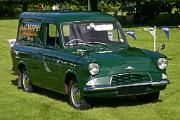
But now we really are getting a long way off topic! We should really have a CD discussion in the Bradford forum and move all this across perhaps.
Jack.
-
robert lintott
- Posts: 353
- Joined: Sun Mar 02, 2008 12:29 am
- Your interest in the forum: Javelin E2PD 22752 D PHU317
Austin 16/6 tourer 1930
Ferrari 308 gt4 1978
Alfa Romeo Spider 2000 1978
Jaguar XJ6 diesel 2006 - Location: somerset uk
Re: Hydraulic camshafts
I agree, they were all dull at the time except for the Mini van which was a bit later and very entertaining ! I assumed the CD was a Javelin successor but was it not , was there one ? Bob